Fraser-Kirk Plastic Surgery
Sunshine Coast
Level 3/37 The Esplanade,
Maroochydore QLD 4558
When a patient loses significant weight, whether through lifestyle change, medication, or bariatric surgery, the conversation is almost entirely about the body. The abdomen, the arms, the thighs, the chest. The skin laxity that follows substantial weight reduction in these regions is well recognised, and the surgical options for addressing it — abdominoplasty, brachioplasty, body contouring — are increasingly part of the mainstream post-weight loss conversation.
When a patient loses significant weight, whether through lifestyle change, medication, or bariatric surgery, the conversation is almost entirely about the body. The abdomen, the arms, the thighs, the chest. The skin laxity that follows substantial weight reduction in these regions is well recognised, and the surgical options for addressing it — abdominoplasty, brachioplasty, body contouring — are increasingly part of the mainstream post-weight loss conversation.
The face is different. The changes that weight loss produces in the face are, for many patients, less anticipated than the changes elsewhere in the body.
To understand what significant weight loss does to the face, it helps to understand what excess weight was doing to it in the first place.
Facial fat exists in discrete compartments, each with its own anatomical location, blood supply, and relationship to the surrounding structures. In the setting of weight gain, these compartments expand — particularly in the lower face and neck, where the submental fat, the jowl fat, the submandibular region, and the subplatysmal fat compartments accumulate volume. The face appears fuller and rounder in the lower third. The cervicomental angle — the angle between the underside of the chin and the front of the neck — blunts. Jawline definition is reduced.
When weight is lost, these compartments deflate. If the weight loss has been substantial or relatively rapid, that deflation reveals structural changes that the additional volume had previously masked.
The result is a combination of three changes occurring together. Volume loss — sometimes significant — from fat compartments that have deflated faster than the skin and soft tissue can accommodate. Skin laxity — particularly in the neck and jowl region, where the skin has been stretched over a larger volume for years and has lost the elasticity needed to recoil once that volume is removed. And the unmasking of underlying structural ageing that was already occurring — the SMAS descent, the ligamentous laxity, the skeletal remodelling — that the additional volume had been partially concealing.
Many patients notice that their face appears older after significant weight loss. This reflects a real anatomical change: the structural and volumetric changes accumulating beneath the surface are revealed together once the supporting volume is lost, rather than gradually over time.
The widespread adoption of GLP-1 receptor agonist medications — semaglutide, tirzepatide, and their successors — has created a patient population that was not, until recently, particularly common in facial surgical practice.
These medications can produce substantial weight loss — in the range of fifteen to twenty percent of total body weight over twelve to eighteen months for many patients who take them. The facial consequences of this degree of weight loss, particularly when it occurs rapidly and in patients whose skin has already begun to lose its elasticity with age, are considerable.
After significant weight loss of this degree, the volume lost from the submental and submandibular compartments includes facial volume that had been providing structural support to the overlying skin. As that support reduces, structural descent that was already present becomes more apparent.
This change is structural in nature. Volume injectables, threads, and energy-based devices address volume or the skin surface; they do not reposition deeper structures that have changed position.
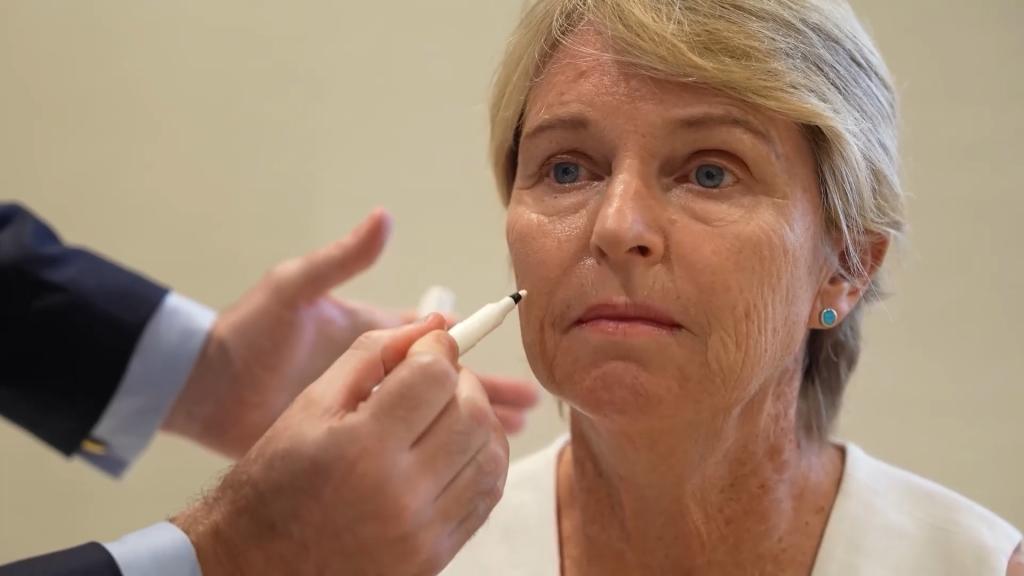
The instinctive response — both from patients and from many practitioners — to post-weight loss facial volume loss is to fill it. Hyaluronic acid fillers, injected into the cheeks, the temples, the tear troughs, the jawline, restore some of the volume that has been lost and can produce meaningful improvement in the short term.
Filler addresses volume, and in a face with significant structural change there are limits to what added volume alone can achieve.
Where the deeper structures of the face have changed position — the SMAS composite has descended, the retaining ligaments have lengthened, jowling has developed along the jawline — adding volume does not change the position of those structures. At higher volumes, the result can be a fuller appearance without addressing the underlying structural change.
The degree of volume loss may also be beyond what filler can practically replace, and filler is temporary, requiring ongoing maintenance. In a face with significant skin laxity and structural change, added volume sits beneath skin that has limited capacity to recoil.
For the majority of patients with significant post-weight loss facial changes, a comprehensive face and neck lift — particularly the deep plane approach combined with structural fat grafting — is, in my view, the most appropriate approach.
Here is why.
The structural component of the procedure — the deep plane dissection with ligamentous release — addresses the SMAS descent and the positional changes that weight loss has unmasked. The retaining ligaments are released. The composite tissue unit is repositioned toward the skeleton in the direction of its descent. The jowls and nasolabial folds are addressed. The neck — which is, in many post-weight loss patients, often the area of greatest change — is comprehensively treated: platysmal plication or management, submental fat where appropriate, cervicomental angle restoration, and lateral neck skin management through the posterior incision.
The volumetric component — structural fat grafting using three fractions differentiated by particle size — restores the deflated fat compartments with the patient’s own tissue. Macrofat for deep structural volume in the midface and tear trough. Microfat for the intermediate zones. Nanofat — mechanically emulsified stromal vascular fraction — placed intradermally in the periorbital region, perioral region, and anterior neck to support skin quality in those areas.
This combination — structural repositioning and autologous volume restoration, in a single operative event — addresses what the post-weight loss face needs: repositioning the tissue that has descended and restoring the volume that has been lost from the correct anatomical compartments.
One of the most important questions in post-weight loss facial surgery is timing, and it is one that deserves a direct answer.
The general principle is weight stability. A patient who is still losing weight — whether through ongoing lifestyle change or continuing GLP-1 medication — should not undergo facial surgical intervention until their weight has been stable for a minimum of three to six months, and ideally longer. Weight loss after surgery changes the result: further deflation can undo the volumetric component, and additional skin laxity can compromise the lifting component. The surgical plan is built around the anatomy that is present at the time of surgery, and that anatomy needs to be stable.
For patients on GLP-1 medications, this raises a nuanced question: should the medication be continued indefinitely, or should surgery be timed to a period off medication? This is a conversation that requires involvement of the patient’s prescribing physician, and the answer will depend on the patient’s metabolic health, the reasons for the medication, and the degree of weight loss that has already been achieved. There is no single correct answer, but the surgical principle is clear: the face should be stable at the time of surgery.
There is also the question of medical optimisation. Significant weight loss — particularly rapid weight loss associated with medication — can be accompanied by nutritional deficiencies, changes in protein status, and alterations in wound healing capacity. Pre-operative nutritional assessment and optimisation, in collaboration with the patient’s medical team, is an important part of preparation for surgery in this population.
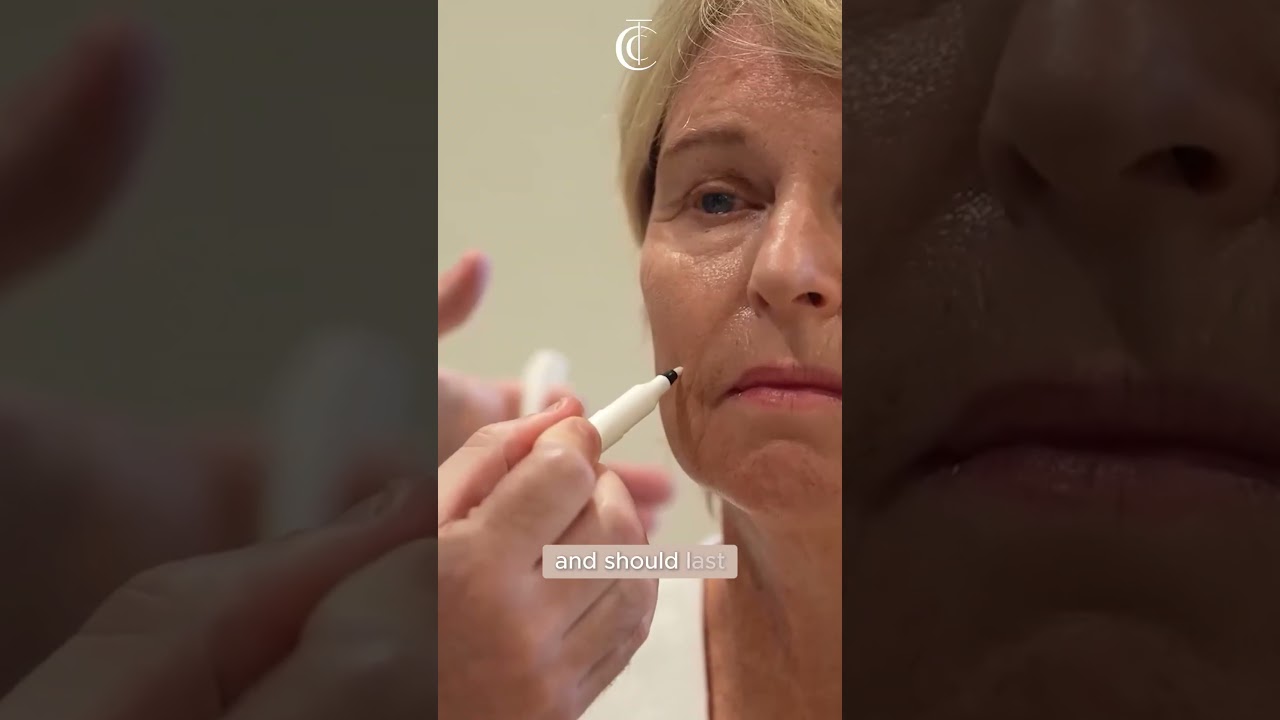
In my experience, the neck is often the area of greatest visible change after significant weight loss, and the most difficult to conceal.
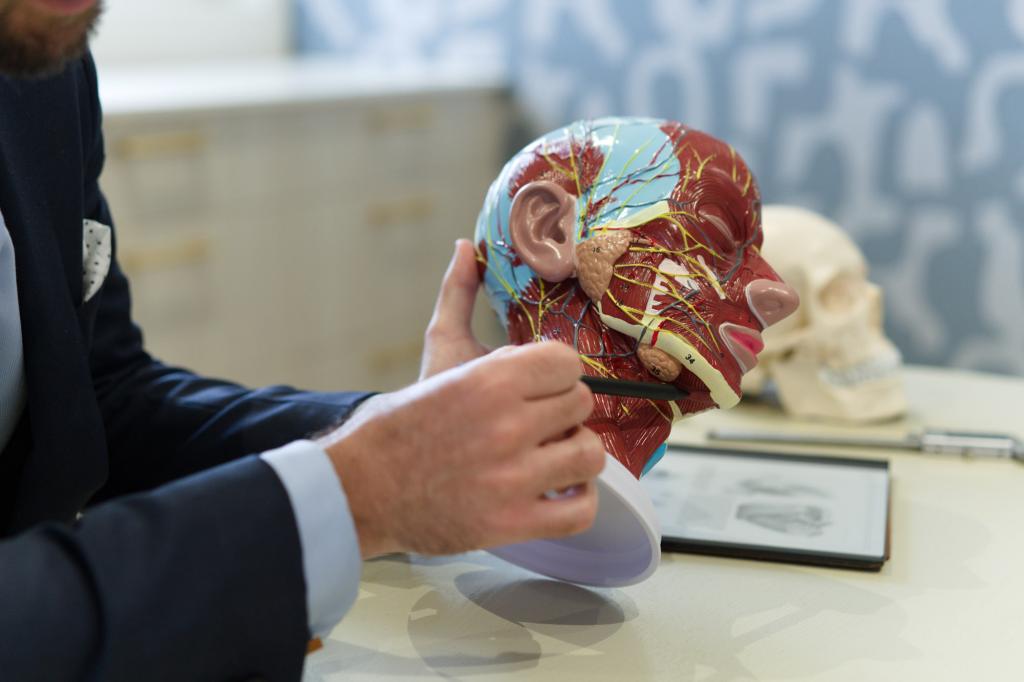
The combination of subplatysmal fat deflation — which reduces the deep structural support of the neck skin — with platysmal laxity, skin redundancy, and the unmasking of cervicomental angle blunting produces several changes in the neck. Horizontal skin folds, visible platysmal banding, reduced cervicomental angle definition, and skin redundancy in the lateral neck are features that may require comprehensive surgical management.
For patients with significant perifacial expansion prior to weight loss — the type II facial ageing pattern described by Bravo, characterised by predominant volume around the jawline and neck rather than facial thinning — the post-weight loss neck may also involve the deep structures: enlarged or caudally displaced submandibular glands, prominent digastric muscles, and residual subplatysmal fat that persists despite surface deflation. These require a reduction neck lift approach — targeting the deep structures specifically — alongside the standard platysmal and skin management components.
Weight loss is, for most patients who achieve it, a profound personal achievement. It frequently represents months or years of effort, discipline, and lifestyle change. The expectation — reasonable and understandable — is that the result will be positive in every dimension.
When patients notice facial changes after their weight loss, the emotional response can be complicated. There may be a sense of unfairness: that something has been taken away at the same time as something significant was gained. There may be a reluctance to acknowledge the facial changes, or conversely an urgency to address them before they feel the full benefit of the weight loss itself.
My approach in these consultations is to give the information clearly, honestly, and without pressure. The facial changes are real and they are addressable. The timing of that address matters. And the decision to pursue surgical intervention — or not, or not yet — should be made from a position of psychological stability and realistic expectation, allowing time rather than acting in a moment of distress about a face that has just changed.
What I can offer is a comprehensive assessment of what has changed, a clear explanation of what surgery can and cannot achieve, and a plan built around the patient’s specific anatomy rather than a generic protocol.
Significant weight loss changes the face in ways that are structural, volumetric, and skin-related — and that, for many patients, are more noticeable than they anticipated. Adding volume alone does not address the structural component of these changes.
A comprehensive deep plane face and neck lift, combined with anatomically directed structural fat grafting, addresses both the structural and the volumetric components. It repositions what has descended and restores volume to the correct anatomical compartments.
The facial changes that follow significant weight loss can be assessed in the same considered way as the changes elsewhere in the body, and addressed where a patient chooses to.
A deep plane face and neck lift with fat grafting is a major surgical procedure performed under anaesthesia, and as with any surgery it carries risks. These can include bleeding, haematoma, infection, delayed wound healing, scarring, asymmetry, changes in skin sensation, hair loss around the incisions, fat graft resorption or irregularity, and temporary or, less commonly, longer-lasting injury to the nerves that control facial movement. There are also risks associated with general anaesthesia. Outcomes vary between individuals, and not everyone is a suitable candidate.
Before proceeding with cosmetic surgery, a referral from your GP or another registered medical practitioner is required, and a seven-day cooling-off period applies for adults. The risks relevant to your individual circumstances will be discussed with you in full during your consultation.
Dr David Sparks is a Specialist Plastic Surgeon (registration MED0001863770) at The Coastal Clinic, Southport, and Fraser-Kirk Plastic Surgery, Sunshine Coast. He holds FRACS (Plast.), with subspecialty training in craniofacial surgery and post-fellowship experience in Vancouver, Beverly Hills, and London in deep plane and comprehensive facial surgery.







All surgery and invasive procedures carry risks. Before proceeding, you should seek a second opinion from an appropriately qualified health practitioner. Read our full information on the risks of surgery. Dr David Sparks — Specialist Plastic Surgeon, MED0001863770.