Fraser-Kirk Plastic Surgery
Sunshine Coast
Level 3/37 The Esplanade,
Maroochydore QLD 4558
Why age alone is not a contraindication, and what an honest conversation about results should sound like. There is an assumption embedded in the way facelift surgery is discussed — in clinics, in the media, and increasingly in the algorithm-driven world of social media aesthetics — that surgical facial rejuvenation (rhytidectomy, commonly called a facelift) […]
There is an assumption embedded in the way facelift surgery is discussed — in clinics, in the media, and increasingly in the algorithm-driven world of social media aesthetics — that surgical facial rejuvenation (rhytidectomy, commonly called a facelift) is fundamentally a procedure for patients in their fifties. That the ideal candidate is someone whose ageing is early enough to correct cleanly, whose skin still has the elasticity to redrape smoothly, and whose volume reserves are sufficient to restore without drama.
That assumption does a disservice to a significant and growing group of patients who present to my consulting room in their seventies, and occasionally their eighties, and whose presenting clinical findings are the same features of facial ageing seen in their younger counterparts, further advanced.
Whether surgery is appropriate for any individual patient is a question that can only be answered on assessment, and for some the answer is no. But the conversation that surrounds that question needs to be more honest, more nuanced, and more individually tailored than it often is. This article is my attempt to have that conversation properly.
To understand what facelift surgery can and can’t achieve in the older patient, you first need to understand what seven decades of facial ageing has actually done, and how it differs — in degree and in kind — from the changes present in a fifty-year-old.
The skeletal changes are more advanced. The orbital rims have widened and deepened. The maxilla has lost projection below the orbital rim. The mandible has lost bone at its angles and along its inferior border. The piriform aperture has widened and receded. These skeletal changes alter the scaffold on which everything above sits, and they can’t be reversed by soft tissue surgery alone. They set the limits of what repositioning can achieve, and they inform what volume restoration needs to accomplish.
The fat compartment depletion is more profound. The deep medial cheek fat, the sub-orbicularis oculi fat, the temporal fat pad, the sub-brow fat: these compartments have been atrophying for decades, and in many patients over seventy the degree of volume loss is substantial. The lower eyelid-cheek junction has lost its smooth transition. The temples are hollow. The lips have thinned. Volume restoration in these patients requires more fat, placed more comprehensively, than in younger patients, and the grafting plan needs to reflect the actual pattern of depletion rather than a standardised approach.
The SMAS descent is further advanced. The retaining ligaments have elongated significantly. The jowls are often substantial. The nasolabial fold is deep and fixed. The neck, in most patients over seventy, has undergone considerable structural change: platysmal bands are often prominent, the cervicomental angle is blunted, the skin of the anterior neck has lost considerable tone.
And then there’s the skin itself, which is the most important variable of all, and the one that most directly shapes the conversation about expectations.
In a younger patient — someone in their late forties or early fifties — the skin retains meaningful elasticity. When the structural layer beneath it is repositioned, the skin accommodates its new position readily. It redrapes. It conforms. The result looks smooth because the skin has the intrinsic capacity to adapt to a new structural relationship.
In a patient over seventy, that capacity is diminished. Not absent, but meaningfully reduced. The collagen network is thinner and less organised. The elastin content is lower. The skin has less capacity to recoil, less ability to adapt to a new position, and a reduced tolerance for tension at the closure.
What this means practically is that the skin envelope in the older patient can’t be expected to redrape with the same crispness it does in younger patients. Fine rhytids — the surface wrinkling that reflects dermal quality changes — aren’t resolved by lifting and won’t be resolved by lifting. The skin will be repositioned and the redundancy will be excised, but the intrinsic quality of the dermis, its texture, its fine surface irregularity, its response to light, isn’t transformed by the structural operation.
I tell patients this directly. Not to discourage them, but because the patient who understands this going in is judging the operation by what it actually does. The patient who expects the structural operation to also resolve their skin quality concerns is judging it by something it was never going to do.
This isn’t a unique limitation of surgery in older patients. It’s simply more pronounced, and more important to discuss explicitly, than it is in the consultation with a fifty-two-year-old.
Here’s what I want to be equally clear about: the structural changes of facial ageing — the SMAS descent, the ligamentous laxity, the jowling, the nasolabial fold, the neck — are addressable in patients over seventy with the same anatomical precision and the same operative approach as in younger patients. The deep plane dissection doesn’t become less effective because the patient is older. The retaining ligaments can be released. The composite flap can be repositioned. The platysma can be managed. The deep neck structures can be addressed where indicated.
Comprehensive deep plane surgery in a well-selected, medically optimised patient over seventy is not a lesser operation. It repositions structure rather than tightening surface, and it returns tissue toward a more anatomically appropriate position rather than pulling it in a direction that doesn’t correspond to how faces actually age. What that means for any individual patient depends on their own anatomy and healing, and can only be assessed in consultation.
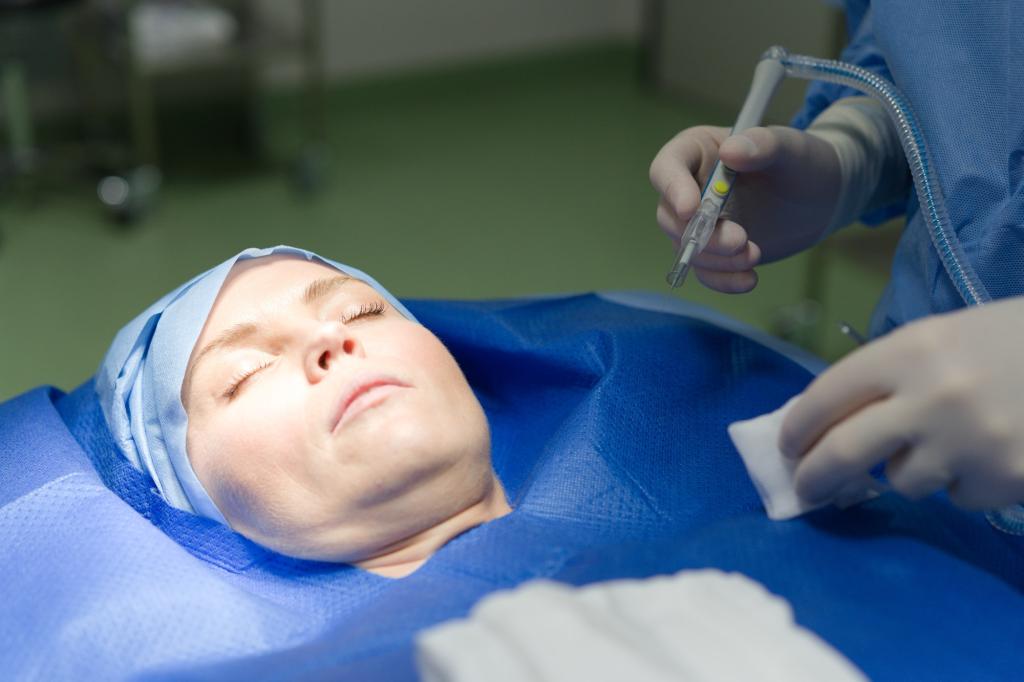
What changes between the fifty-year-old and the seventy-five-year-old is the nature of the result, not whether one is achievable. The fifty-year-old is working with a face that still carries most of its original volume and whose skin quality is still good. The seventy-five-year-old is working with a face that can be comprehensively addressed at depth, but whose surface reflects the accumulated skin quality changes that surgery doesn’t reverse.
They are not identical situations, and the older patient deserves to understand the difference — not as a limitation to be apologised for, but as an accurate account of what the operation is and isn’t able to address in their specific anatomy.
Structural fat grafting becomes, if anything, more important in the older patient rather than less. The degree of fat compartment depletion is greater. The contribution of volume loss to the overall aged appearance is larger. Fat grafting also has a role in the appearance of the overlying skin, through the nanofat component placed intradermally, and that role is not limited by the patient’s age.
In my practice, the fat grafting plan for an older patient is typically more comprehensive than for a younger one. More macrofat is required for deep midface and tear trough restoration. The temporal region, often significantly hollowed in patients over seventy, requires specific attention. The sub-brow region, the lip body, the perioral region: all of these may need addressing to an extent that’s not typically required in younger patients.
The nanofat component is particularly relevant in the older patient. Intradermal nanofat is placed in the periorbital, anterior neck and perioral skin with the aim of improving texture and tone over the months following surgery. The evidence base for this remains limited and is still developing, the degree of change differs considerably between individuals, and it is not a substitute for the structural operation.
The combination of structural repositioning and comprehensive fat grafting in the older patient addresses something neither component addresses alone: a face that has been both lifted and volumised, in a single operative event that takes account of the three-dimensional picture of what ageing has done rather than one dimension of it.
I’d be doing a disservice to this article if I didn’t address directly the medical considerations that are more relevant in older patients and that require careful assessment before surgery is offered.
Cardiovascular fitness is the primary concern. Deep plane facelift with fat grafting is a procedure of four to five hours under general anaesthesia. The anaesthetic risk in a medically optimised seventy-five-year-old is low but not negligible, and it requires honest pre-operative assessment by the anaesthetic team. Patients with significant cardiac, respiratory or renal disease require careful multidisciplinary planning. In some patients, the medical risk will be prohibitive, and that assessment must be made clearly and without ambiguity.
Medications are a more complex issue in older patients than in younger ones. Anticoagulants, antiplatelets, antihypertensives, and the growing number of medications taken for chronic conditions all require pre-operative review and management. The haematoma risk — already the most common significant complication of facelift surgery — is elevated in patients whose blood pressure is less consistently controlled or whose medication history complicates the pre-operative cessation protocol.
Nutritional status matters. Older patients, particularly those who have experienced weight loss, reduced appetite or limited physical activity, may have reduced protein reserves, micronutrient deficiencies or compromised wound healing capacity that requires pre-operative optimisation. I approach this as part of the surgical preparation, not as a peripheral concern.
Wound healing in older patients is generally adequate but warrants additional attention. The skin is thinner, the dermal blood supply less robust, and the tolerance for tension at the closure lower. These considerations inform how conservatively I manage skin excision and how carefully I distribute tension across the closure — principles that apply in all facelift surgery but are more consequential in the older patient.
The recovery trajectory in older patients is broadly similar to that in younger patients, but with some predictable differences worth discussing.
Bruising tends to be more extensive and takes longer to resolve — not because the surgery has been more traumatic, but because the skin is thinner and the subcutaneous vascularity less resilient, meaning extravasated blood takes longer to be reabsorbed. Patients over seventy should expect bruising to be a feature of the recovery for three to four weeks rather than the two weeks that younger patients often experience.
Swelling follows a similar pattern to younger patients but may feel more disruptive in older patients for whom social reintegration is important. I counsel patients that the period from weeks three to six, where the swelling is uneven and the result isn’t yet visible, requires patience and trust, and that this period is no different in the older patient than in any other. The result at three months will be substantially visible, and at twelve months fully established.
Comfort during recovery is managed with appropriate multimodal analgesia, though pain and discomfort are experienced differently by every patient. In my experience, older patients often approach recovery methodically. They have perspective. They follow instructions carefully, and they don’t rush back to activity before they should. These aren’t trivial advantages.
I want to spend a moment on expectations, because I think the discourse around this topic sometimes gets the direction of the conversation backwards.
When surgeons discuss expectations with older patients, the framing is often one of managing downward: of tempering enthusiasm, of introducing caveats, of preparing the patient for a result that’s necessarily less than what a younger patient might achieve. This framing, while well intentioned, can inadvertently communicate that the older patient is a second-tier candidate for surgery whose result will be a lesser version of the real thing.
That’s not my view.
My view is that expectations need to be accurate — calibrated to what a particular patient’s anatomy and healing are likely to allow — rather than systematically reduced because of age. Accuracy runs in both directions. It means being explicit about what the operation does not do. It also means not assuming in advance that a patient in their seventies should be counselled toward something less than what their own assessment actually supports.
What accuracy requires, in the older patient, is specificity about the skin quality dimension of the result, the fine surface wrinkling that the structural operation doesn’t resolve, and honesty about the difference between structural restoration and skin regeneration. These are things I discuss directly and without euphemism. They’re not disappointments. They’re simply parts of the picture that deserve to be named before surgery, not discovered after it.
The patient who comes in with accurate expectations and a medically sound profile, operated on with the same technical standard I apply to every facelift regardless of age, will be seen at their twelve-month review with the result that their own anatomy and healing have produced.
The face at seventy has a history. It carries decades of expression, of sun, of living. It’s not the face of a fifty-year-old, and surgery won’t make it one. But it’s a face that has structural changes that are addressable, volume deficits that are restorable, and a fundamental anatomy that responds to the same rigorous surgical approach as any other.
Age isn’t a contraindication to facelift surgery. It’s a variable that shapes the conversation, informs the plan, and requires honest and individualised assessment. For the patient who is medically fit, anatomically appropriate and genuinely informed about what surgery will and won’t achieve, a facelift after seventy is not a compromise.
It is an operation with a clear and defined role, and one I approach with the same rigour at seventy as I do at fifty.
Facelift surgery is a major surgical procedure with real risks, which are discussed with you in full at consultation and again before surgery. Complications can include bleeding, haematoma — a collection of blood beneath the skin that is the most common significant complication of facelift surgery — infection, wound healing difficulties, scarring, asymmetry, changes in skin sensation, and the possibility of injury to the branches of the facial nerve. The latter is uncommon and often temporary, but it is a serious risk that patients undergoing any facelift procedure should understand. Facelift surgery is performed under general anaesthesia, which carries its own risks, and in older patients the general anaesthetic and medical considerations described above require particular assessment. Recovery takes weeks, not days, and revision or further surgery is sometimes required. Outcomes vary between individuals according to anatomy, healing and other factors, and no result can be guaranteed.
Before proceeding, a referral from your GP or another registered medical practitioner is required, and a seven-day cooling-off period applies. All of this will be discussed with you carefully in advance.
I consult at The Coastal Clinic on the Gold Coast and Fraser-Kirk Plastic Surgery on the Sunshine Coast. If you are considering facelift surgery and would like to discuss what the surgery and recovery would involve for you specifically, I welcome an initial consultation.
Dr David Sparks — MBBS(Hons) MS(Plast) PhD FRACS(Plast) — Specialist Plastic Surgeon, MED0001863770
All surgery and invasive procedures carry risks. Before proceeding, you should seek a second opinion from an appropriately qualified health practitioner.







All surgery and invasive procedures carry risks. Before proceeding, you should seek a second opinion from an appropriately qualified health practitioner. Read our full information on the risks of surgery. Dr David Sparks — Specialist Plastic Surgeon, MED0001863770.