Fraser-Kirk Plastic Surgery
Sunshine Coast
Level 3/37 The Esplanade,
Maroochydore QLD 4558
A realistic guide to the weeks that follow, and how to give your result the best possible start. The decision to have a face and neck lift involves two distinct phases of research. The first concerns the surgery itself — the technique, the surgeon, the likely outcome. The second concerns what happens afterwards. In my […]
The decision to have a face and neck lift involves two distinct phases of research. The first concerns the surgery itself — the technique, the surgeon, the likely outcome. The second concerns what happens afterwards. In my experience, patients who are well prepared for recovery manage it considerably better than those who encounter it without a clear picture of what to expect.
This post is about that second phase. It covers what recovery from a face and neck lift actually involves, week by week, and the practical steps that make a meaningful difference to how you feel during it and to the quality of the result at the end of it.
A face and neck lift — and in particular a deep plane facelift, which involves dissection at a deeper anatomical level and release of the retaining ligaments — is a significant surgical procedure. Performed under general anaesthesia in an accredited hospital, it typically takes between four and six hours. That fact alone shapes what recovery looks like.
The first two weeks are the most demanding. Swelling and bruising are universal and are often more substantial than patients anticipate. There is discomfort, though most patients describe it as tightness and pressure rather than sharp pain. Daily activities are limited. A support garment is worn around the face and neck. Rest is not optional — it is part of the process.
By weeks three and four, the most obvious swelling begins to resolve and most patients feel well enough to resume light activities and, for those whose work is desk-based and can be managed discreetly, to return to professional life. But the recovery is not over.
What most discussions of facelift recovery understate is that swelling in the deeper tissues — particularly after a deep plane procedure — resolves slowly and unevenly. The final result is not visible at four weeks, and it is not fully visible at three months. Accurate assessment of the outcome requires time, and patience with that process is one of the most important things a patient can bring to the post-operative period.
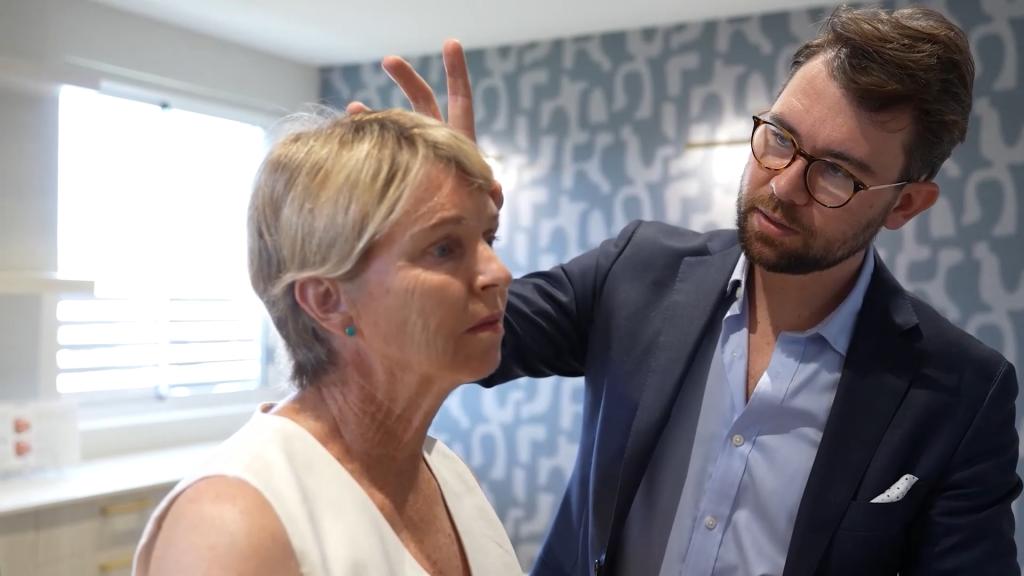
Many patients choose to address the upper face at the same time as a deep plane face and neck lift — most commonly upper or lower blepharoplasty, or a brow lift. There is a sound logic to this: the face ages as a whole, and treating it as a whole, under a single anaesthetic with a single recovery, is often preferable to staging procedures months apart.
These additions change the recovery picture less than most patients expect. Blepharoplasty adds swelling and bruising around the eyes in the first one to two weeks, but the pain associated with it is generally minimal. A brow lift is similar in most respects, with one caveat worth naming: some patients experience brow discomfort or headache in the early days. This is not something I leave patients to ride out. It is monitored and managed closely, and it settles.
You will wake from surgery in the recovery area with a compression dressing in place around your face and neck. Drains may be in place; if so, they are typically removed within 24 to 48 hours. Most patients spend one night in hospital, though this can vary depending on the extent of the procedure.
The immediate post-operative period involves a degree of grogginess from anaesthesia, and some tightness and discomfort around the face and neck. My team and I manage your pain relief closely. Most patients are surprised to find that the discomfort in the first 24 hours is manageable — significant pain in the immediate post-operative period should prompt contact with my rooms.
Swelling begins immediately and continues to develop over the first 48 to 72 hours before it peaks. This is normal. You will not look your best in the first few days. Expect this rather than be alarmed by it.
The first week is largely about rest, wound care, and allowing the initial phase of healing to proceed without interference. Practical guidance for this period:
By the end of week one, the most intense swelling will have begun to stabilise, though it will not yet be reducing. Bruising will be visible. You will look — and likely feel — considerably less well than you might like, and this is entirely expected.
This is typically when recovery begins to feel more manageable. You continue to wear the compression garment, though usually with a modified regimen by week two. Sutures are typically removed in stages over the first one to two weeks.
Bruising begins to yellow and fade by the end of week two for most patients, though it can persist longer in some individuals — particularly those taking blood thinners or with certain skin types. Swelling remains significant, though it shifts in character from a firm, tight oedema to something softer.
Many patients experience a period around weeks two to three that I prepare them for specifically: a phase where the swelling and bruising have not yet fully resolved, the skin looks uneven, and the early result is difficult to assess. This is not a sign that something has gone wrong. It is a predictable phase in healing that all patients pass through. The tissues are still settling, the deeper swelling is still present, and the final landscape of the face is not yet visible.
Sleep continues to improve. Most patients are sleeping more comfortably, though still somewhat elevated. Energy returns gradually. Light activity is appropriate; the threshold for what counts as light gradually expands through this period.
For patients with desk-based work, many are able to return to work in some capacity between weeks two and three, though this depends on how visible the healing signs remain and on the individual’s comfort with that. Defer physically demanding work until at least four to six weeks.
By weeks four to six, the majority of the visible bruising has resolved. Swelling has reduced substantially in the superficial tissues, though it persists in the deeper layers — particularly in the cheeks and below the jaw. For deep plane procedures, where the dissection plane is deeper and more extensive, this deeper swelling takes longer to resolve than after more superficial techniques.
Most patients feel well by this point. Energy is restored, sleep is normal, and the day-to-day restrictions of the early recovery period have largely lifted. You can reintroduce exercise progressively: walking first, then light cardiovascular activity, then more vigorous exercise by six weeks if healing has proceeded well. Discuss high-impact or heavy resistance exercise with me before resuming it.
The incisions are maturing. The scars, which sit around the ears and in the hairline, will continue to soften and fade over the coming months; at this stage they are still relatively fresh, and they need protection from the sun.
This is the phase that most recovery timelines underserve.
At three months, many patients look very well, and the early result is clearly visible. But the deep plane facelift — which repositions significant composite tissue at depth — takes longer to fully settle than this. There is swelling in the deeper facial planes that does not fully resolve until three to six months. Regions that may feel firm, numb, or slightly uneven at weeks six to eight typically normalise through this period.
Sensation returns gradually to areas that may have felt altered in the early weeks. The skin over the cheeks and in front of the ears commonly has some degree of numbness or altered sensation for several weeks to months; this is a consequence of the sensory nerves in the subcutaneous layer being affected by the dissection, and it nearly always resolves.
Scar maturation continues throughout this period. The pink, slightly thickened scars of the first few months progressively flatten, soften, and pale. In most patients they become very inconspicuous; the extent to which they do so is influenced by genetics, skin type, and adherence to scar management recommendations. Silicone strips and sun protection are the evidence-based cornerstones of scar management in this phase.
The care taken in the lead-up to surgery, and the perioperative management of the healing environment, is not incidental to the outcome — it is part of how good results are achieved.
In the weeks before surgery, I ask patients to avoid aspirin, anti-inflammatory medications, fish oil, vitamin E, and other agents that affect bleeding. Pre-operative skincare optimisation, particularly for skin quality and hydration, forms part of the preparation for patients undergoing concurrent nanofat grafting.
In my practice, I incorporate LED photobiomodulation — red and near-infrared light therapy — as a perioperative tool. The evidence for LED therapy in supporting wound healing and reducing post-operative oedema and inflammation is growing, and it is a useful adjunct in the post-operative period, particularly in the first four to six weeks, when the healing environment is most responsive. This is available through The Coastal Clinic as part of our perioperative care program.
Arnica deserves a specific note, because the advice patients find online is often undifferentiated. I recommend topical arnica only, and only after the first three days following surgery. Ingested arnica is a different matter entirely: it can raise blood pressure, and around facelift surgery — where a haematoma is the most common significant complication — it should be avoided altogether.
Patients regularly ask whether I prescribe corticosteroids after surgery to bring the swelling down faster. I deliberately do not. Swelling after a face and neck lift can be managed well without them — head elevation, cool therapy, compression, rest, and the perioperative measures described above do that work reliably.
Steroids, meanwhile, carry a cost that is easy to underestimate: they can significantly disrupt sleep. Sleep is one of the most valuable resources a healing patient has; it is when much of the body’s repair work happens. Trading it for a modest, temporary reduction in swelling is, in my view, a poor exchange.
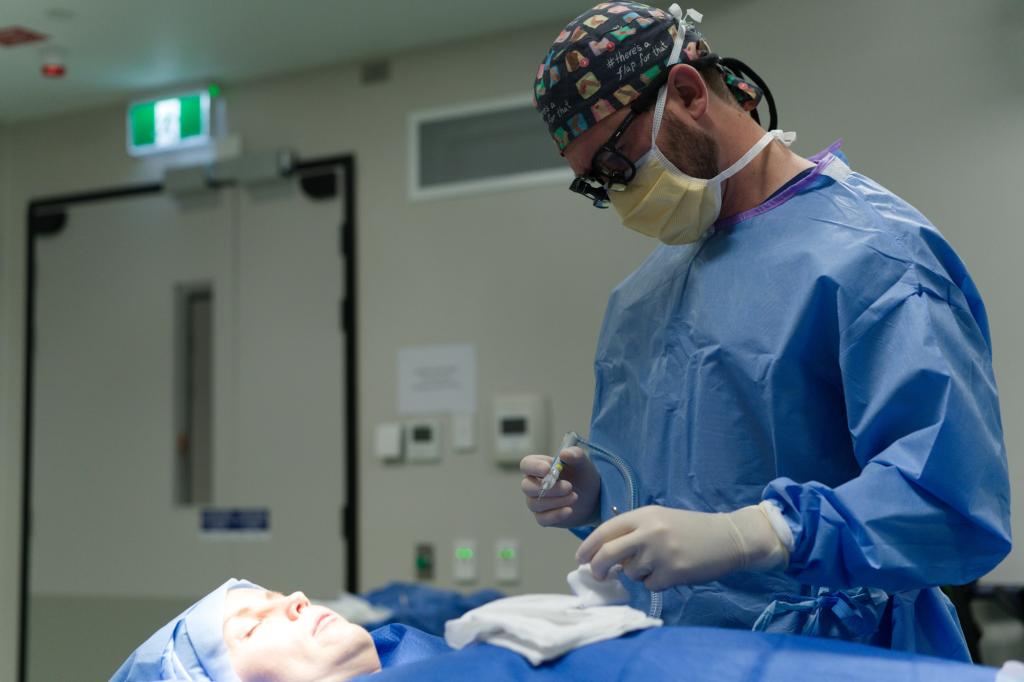
Recovery is not passive. There are things patients do — and things they avoid — that have a direct bearing on how their recovery proceeds and, ultimately, on the quality of the result.
The most effective things are also the least dramatic. Rest properly and protect your healing tissues in the early weeks. Do not return to strenuous activity too soon. Avoid smoking — before and after surgery. Stay well hydrated. Protect the incisions from sun exposure. Attend your post-operative appointments; these exist not merely as administrative check-ins but as opportunities to monitor your healing and to address any concerns early, when they are easiest to manage.
Be patient with the timeline. This is the aspect of recovery that requires the most from patients. The result you are recovering into takes months to fully emerge. Comparing your appearance at six weeks to your expectations at six months will lead to unnecessary anxiety. The patients I see at three and six months are invariably further along than their weeks-four-to-six selves suggested they would be.
Recovery is not something you navigate alone. Throughout the postoperative healing phase, you can always reach me and my team directly. If something concerns you, whether a change in swelling, a question about a wound, or simply uncertainty about whether what you are experiencing is normal, we want to hear about it early. Nearly every issue that arises in recovery is easily managed when raised promptly, and that active management is part of how good outcomes are protected.
A growing number of my patients travel to the Gold Coast for surgery — from regional Queensland and, increasingly, from Sydney and Melbourne. The pathway for these patients is well established. Surgery takes place on the Gold Coast in an accredited hospital, and after discharge you recover locally for the first week at a five-star hotel. This keeps you close to me and my team during the period when reviews are most frequent, sutures are removed, and having your surgical team nearby matters most.
Once the first week’s milestones are complete and I am satisfied that your healing is on track, you return home, and your longer-term follow-up is arranged where you live. For Sydney and Melbourne patients in particular, this means the demanding early phase of recovery is fully supported here, without the rest of the follow-up schedule requiring repeated travel.
A face and neck lift is a major surgical procedure with real risks, which are discussed with you in full at consultation and again before surgery. Complications can include bleeding, haematoma — a collection of blood beneath the skin that is the most common significant complication of facelift surgery — infection, wound healing difficulties, scarring, asymmetry, changes in skin sensation, and the possibility of injury to the branches of the facial nerve. The latter is uncommon and often temporary, but it is a serious risk that patients undergoing any facelift procedure should understand.
Before proceeding, a referral from your GP or another registered medical practitioner is required, and a seven-day cooling-off period applies. All of this will be discussed with you carefully in advance.
I consult at The Coastal Clinic on the Gold Coast and Fraser-Kirk Plastic Surgery on the Sunshine Coast. If you are considering a face and neck lift and would like to discuss what the surgery and recovery would involve for you specifically, I welcome an initial consultation.
Dr David Sparks — MBBS(Hons) MS(Plast) PhD FRACS(Plast) — Specialist Plastic Surgeon, MED0001863770
All surgery and invasive procedures carry risks. Before proceeding, you should seek a second opinion from an appropriately qualified health practitioner.







All surgery and invasive procedures carry risks. Before proceeding, you should seek a second opinion from an appropriately qualified health practitioner. Read our full information on the risks of surgery. Dr David Sparks — Specialist Plastic Surgeon, MED0001863770.