Fraser-Kirk Plastic Surgery
Sunshine Coast
Level 3/37 The Esplanade,
Maroochydore QLD 4558
Why the jawline changes with age, and why the answer lies deeper than the skin. In 1989, the American plastic surgeon David Furnas published a short anatomical paper that changed how surgeons think about the ageing face. He described a set of fibrous anchors, the retaining ligaments, that tether the skin and soft tissue of […]
In 1989, the American plastic surgeon David Furnas published a short anatomical paper that changed how surgeons think about the ageing face. He described a set of fibrous anchors, the retaining ligaments, that tether the skin and soft tissue of the face to the bone beneath. One of them runs along the jawline. It is a big part of why jowls form exactly where they do.
Jowling is one of the most common concerns I see in consultation. Clinically, it is soft tissue sitting over and below the jawline, in front of a fixed point along the jaw. This post explains what jowls actually are, why they develop, and what the options are for treating them, including where non-surgical treatments help and where they reach their limit.
Jowls are the descent of soft tissue and fat below the jawline, usually just in front of a fixed point roughly in line with the corner of the mouth. That fixed point matters. It is the mandibular retaining ligament, which holds the tissue at the front of the jaw firmly to the bone.
As the tissue on either side of that anchor descends, the anchor stays put. The result is the characteristic scalloped contour of jowling: a notch, often called the prejowl sulcus, with a bulge of descended tissue behind it. The straight line of the jaw becomes a series of curves.
Jowling is rarely caused by one thing. It is the visible result of several changes happening at once, at different depths of the face.
Descent of the soft tissues. Over time, the masseteric cutaneous ligaments, which support the cheek and lower face along the jaw, stretch and weaken. As they loosen, the fat and SMAS layer of the cheek (the fibromuscular sheet that sits beneath the skin and fat) slide downward and forward, and gather over the jawline.
Changes in the fat compartments. The face is not one continuous layer of fat. It is divided into distinct compartments, and they change differently with age. Some deflate, like the deep fat of the mid-cheek. Others, including the jowl fat compartment itself, can hold or gain volume. So the mid-face loses support above while the lower face gains weight below. That combination accentuates the jowl.
Bone changes. The skeleton ages too. The jawbone gradually loses height and projection, particularly in front of the jowl. With less scaffolding underneath, the soft tissues have less to drape over.
Skin quality. Skin loses collagen and elasticity with age, sun exposure and smoking. On its own, lax skin does not make a jowl. It does, however, determine how the skin sits once the deeper tissues are repositioned.
Weight change. Significant weight loss can leave the soft tissues of the lower face looser, and weight gain adds to the jowl fat compartment. Either can bring jowling forward.
Not every jowl is a sign of ageing. Some patients have a genetic predisposition to jowling, and for them it’s a recognised anatomical variant rather than something that arrived with time. It often appears early, sometimes in the late twenties or thirties, and it frequently runs in families. When I ask, patients will often tell me a parent or sibling has the same contour along the jaw.
Several inherited features can contribute. The jowl fat compartment can be naturally fuller. The supporting ligaments along the jaw can be less robust, so the tissue in front of them descends earlier. A shorter or less projected jaw, or a chin that sits further back, gives the soft tissues less structure to drape over. Thicker, heavier facial soft tissue can also play a part.
This needs its own assessment. The plan for a patient in their thirties with an inherited jowl is often quite different from the plan for someone in their sixties whose jowling has developed with age. It can involve more attention to the jowl fat and jaw structure, and less to skin excess.
This is a reasonable question, and it deserves an honest answer.
Non-surgical treatments can help in selected, earlier cases. Skincare and sun protection support skin quality. Energy-based devices can produce modest skin tightening. Carefully placed hyaluronic acid filler in the prejowl sulcus can soften the notch in front of an early jowl, and small volumes along the chin or jaw can alter contour in the right patient.
What none of these can do is lift descended tissue back to where it came from. Filler adds volume; it does not reposition the ligaments or the SMAS. In a face where jowling is caused by descent, adding volume around the jawline adds weight to the lower face rather than moving tissue back. I’ve written separately about the evidence on long-term filler use, including MRI studies showing hyaluronic acid filler persisting for years beyond its expected lifespan, in Filler or Facelift? What the Science Actually Says.
The threshold for surgery is defined by anatomy, not age. When the jowl is the product of ligament laxity and tissue descent, the treatment needs to act at that level.
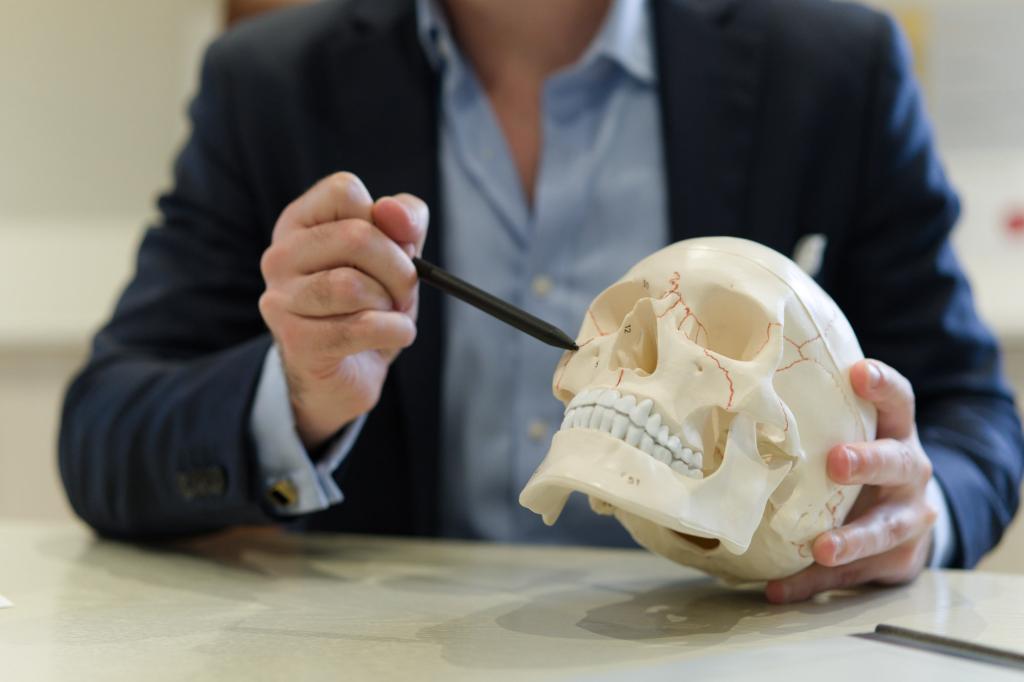
For established jowling, the surgical treatment is a face and neck lift (rhytidectomy, commonly called a facelift). The technique matters, because not all facelifts act on the jowl in the same way.
In a conventional SMAS facelift, the dissection stays above the retaining ligaments, and the tissues are tightened with the ligaments left in place. (I explain this distinction in more detail in Deep Plane vs SMAS Facelift: What’s the Difference?)
In an extended deep plane face and neck lift, which is the foundation of my approach, the dissection is carried beneath the SMAS and the masseteric and zygomatic retaining ligaments are released. This allows the skin, fat and SMAS of the cheek and jowl to be lifted together as a single composite unit, in a more vertical direction and back toward the position they descended from. Because the lift is carried by the deeper tissue rather than the skin, less tension is placed on the skin itself.
The jowl is part of a larger picture. The jawline also depends on the neck beneath it. Where the anatomy calls for it, I address the platysma muscle, the angle behind the jaw, and deeper structures such as the submandibular glands and the fat beneath the platysma, which lifting alone does not address. Where the mid-face has lost volume, small volumes of the patient’s own fat can be grafted into the deep compartments during the same operation.
For some patients, a short scar or “mini” facelift is a reasonable option. It generally suits people with early jowling, good skin quality and minimal neck laxity. It involves shorter incisions and, often, a shorter recovery.
The trade-off is that a smaller operation addresses less anatomy. If the neck is also involved, or the jowling is more advanced, a limited procedure may not treat the problem fully, and it may not last as long. Which approach suits you depends on your anatomy, and I’d rather have that conversation openly than steer you toward a smaller procedure because it sounds easier.
A deep plane face and neck lift is a major operation, performed under general anaesthesia in an accredited hospital. The first two weeks involve significant swelling and bruising, and most patients take two to three weeks away from work and social commitments. Swelling in the deeper tissues continues to settle over three to six months, and that is when the result can be properly assessed. I cover the timeline in detail in Recovery After Face and Neck Lift Surgery: What to Expect.
At what age do jowls start? There’s no fixed age. Many people notice early jowling in their forties, but genetics, facial structure, sun exposure, smoking and weight change all influence when it appears.
Can you have jowls in your twenties or thirties? Yes. Some people have an inherited tendency to jowling, often shared with a parent or sibling. It’s a recognised anatomical variant, and it can be assessed and treated on its own terms.
Can facial exercises get rid of jowls? There’s no good evidence that facial exercises reverse jowling. Jowls are caused largely by ligament laxity, fat compartment change and bone remodelling, none of which exercise can reverse.
Will losing weight get rid of my jowls? Losing weight can reduce fullness in the lower face, but significant weight loss can also make jowling more visible by leaving the skin and soft tissues looser. Facial ageing after weight loss often needs its own assessment.
How long does a facelift for jowls last? A face and neck lift does not stop ageing, and the face continues to age from its new starting point. How long the change is visible varies between individuals and depends on anatomy, skin quality, lifestyle and technique.
Jowls are not a skin problem. They are the surface expression of changes in the ligaments, the fat compartments and the bone beneath. Understanding that is what separates treatment that adds volume to the face from treatment that acts on its structure. Whether surgery is appropriate for you, and which approach, can only be decided through a careful assessment in consultation.
A face and neck lift is a major surgical procedure performed under general anaesthesia, and it carries real risks, which are discussed with you in full at consultation and again before surgery. Complications can include bleeding, haematoma — a collection of blood beneath the skin, and the most common significant complication of facelift surgery — infection, wound healing difficulties, scarring, asymmetry, changes in skin sensation, hair loss around the incisions, and injury to the branches of the facial nerve, which is uncommon and often temporary but can be serious. Deep plane surgery operates closer to the facial nerve than more superficial techniques.
Fat grafting carries additional risks, including partial resorption, irregularity and the possible need for further grafting.
Recovery takes weeks rather than days, and further surgery is sometimes required. Outcomes vary between individuals according to anatomy, healing and other factors.
Before proceeding, a referral from your GP or another registered medical practitioner is required, and a seven-day cooling-off period applies. All of this will be discussed with you carefully in advance.
I consult at The Coastal Clinic on the Gold Coast and Fraser-Kirk Plastic Surgery on the Sunshine Coast. If you are considering facial surgery and would like to discuss what would be involved for you specifically, I welcome an initial consultation.
Dr David Sparks — MBBS(Hons) MS(Plast) PhD FRACS(Plast) — Specialist Plastic Surgeon, MED0001863770
All surgery and invasive procedures carry risks. Before proceeding, you should seek a second opinion from an appropriately qualified health practitioner.







All surgery and invasive procedures carry risks. Before proceeding, you should seek a second opinion from an appropriately qualified health practitioner. Read our full information on the risks of surgery. Dr David Sparks — Specialist Plastic Surgeon, MED0001863770.